
VERO

Designing a AI- powered app scoping platform that turns ideas into struceted, build-ready plans.
Role: Product Design Lead (0 → 1)
Duration: ~6–8 weeks
Platform: Web Responsive
Scope: UX Strategy & Information Architecture / AI-assisted workflow definition
Overview
Vero is an AI-powered platform designed to eliminate one of the biggest bottlenecks in product development: unclear, inconsistent, and time-consuming project scoping.
The goal was to transform raw ideas into structured, actionable documentation — including features, architecture, and timelines — in minutes instead of weeks.
I led the end-to-end product design, translating a complex system into a clear, scalable experience that serves founders, product teams, and agencies.
The Problem
Scoping a digital product is slow, fragmented, and expensive.
- Founders struggle to translate ideas into clear requirements
- Agencies spend hours manually writing scope documents
- Misalignment between stakeholders leads to delays and rework
- Technical and non-technical users lack a shared language
The result: wasted time, unclear expectations, and costly mistakes before development even begins.
The Opportunity
The MillionScopes framework revealed a clear opportunity:
Automate the entire scoping process using AI — while keeping users in control.
Instead of replacing human decision-making, the product needed to augment it, generating structured outputs that users can refine, customize, and trust.
Design Challenge
How might we design a system that:
- Transforms abstract ideas into structured outputs
- Supports both technical and non-technical users
- Scales across multiple project types
- Maintains clarity despite high complexity
Approach
1. Structuring Complexity into a Clear System
From the scope document, the product includes multiple layers:
- Project Studio
- Dashboard
- Supplier Catalog
- Vendor Management
- Transactions
- User & Settings
Rather than exposing this complexity upfront, I designed a progressive disclosure model:
- Start simple (idea input)
- Expand into structured outputs
- Reveal advanced tools only when needed
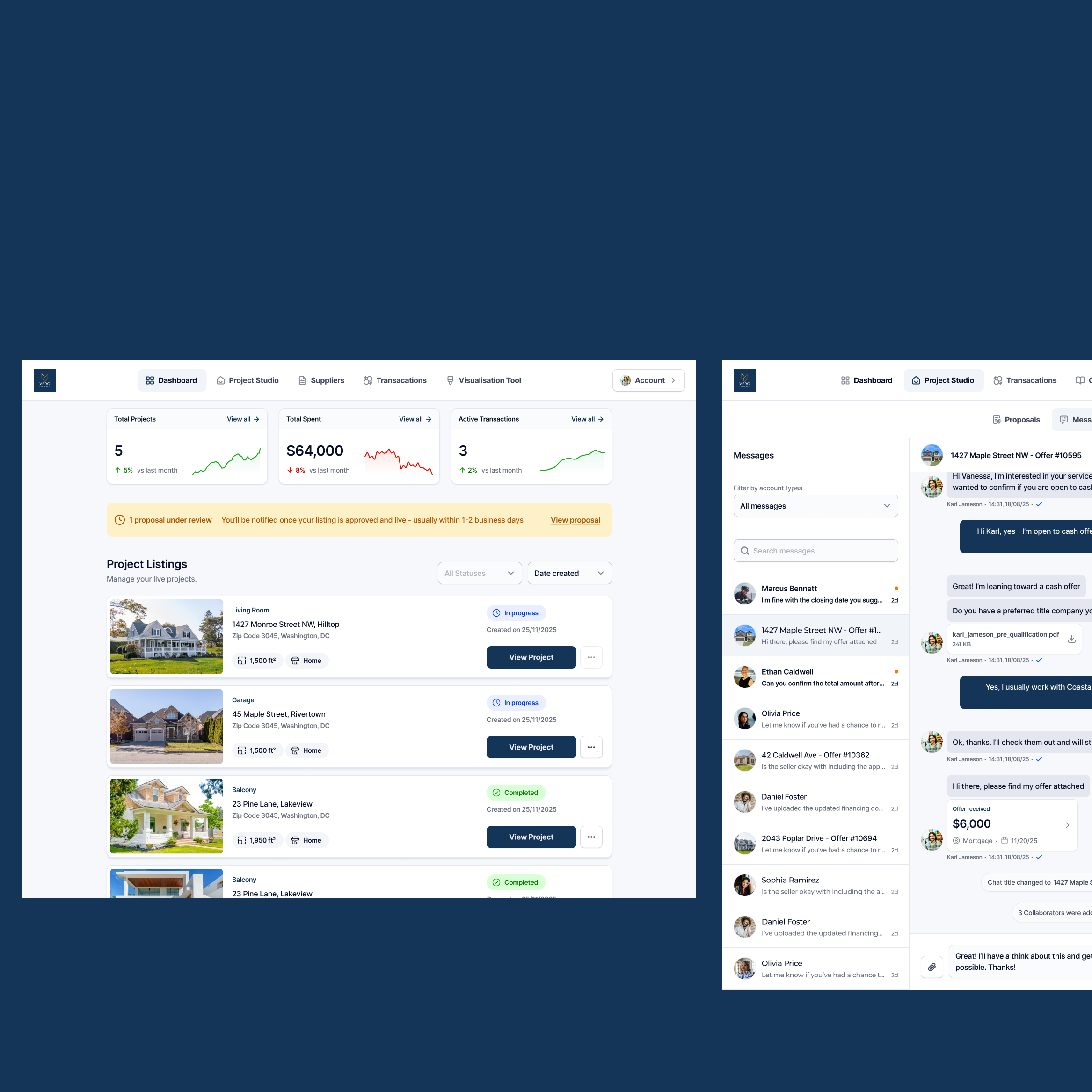
2. Designing the Core Experience: Project Studio
The heart of the product is the Project Studio, where users:
- Input their idea
- Generate AI-powered scope outputs
- Refine features, flows, and requirements
Key design decisions:
- Guided input instead of blank states
- Modular sections (features, roles, flows)
- Editable AI outputs for flexibility
This transforms users from passive recipients into active collaborators with AI.
3. Turning Outputs into Real Value
Most AI tools stop at generation.
Vero goes further — structuring outputs into usable assets:
- Feature breakdowns
- Product architecture
- Functional requirements
- Scoping documentation
The goal was to ensure outputs are not just readable — but build-ready.
4. Designing for Multiple User Types
The platform needed to work for:
- Founders with no technical background
- Product managers
- Agencies and developers
I introduced:
- Clear terminology (non-technical first)
- Layered complexity
- Contextual guidance across flows
5. System Thinking & Scalability
The scope revealed a broader ecosystem:
- Vendor management
- Supplier catalog
- Transaction systems
- User roles and permissions
Instead of treating these as separate tools, I designed a connected system where:
- Scopes feed into execution
- Projects connect to vendors
- Outputs evolve into delivery workflows
Key Design Decisions
AI as a collaborator, not a replacement
Users guide the process — AI accelerates it.
Progressive complexity
Start simple, unlock depth over time.
Structured outputs over raw generation
Everything generated is usable, editable, and actionable.
System-first thinking
Designed not just a feature, but a scalable product ecosystem.
Impact
The redesigned experience transformed Vero into:
- A complete product scoping platform, not just an AI tool
- A system that reduces scoping time from days to minutes
- A bridge between idea, strategy, and execution
What This Project Demonstrates
- Ability to design AI-powered products beyond UI trends
- Strong systems thinking and information architecture
- Experience translating complex scope documents into real products
- Focus on business impact, not just visuals
Final Reflection
This project wasn’t about designing screens.
It was about designing clarity —
turning ambiguity into structure, and ideas into execution-ready products.